
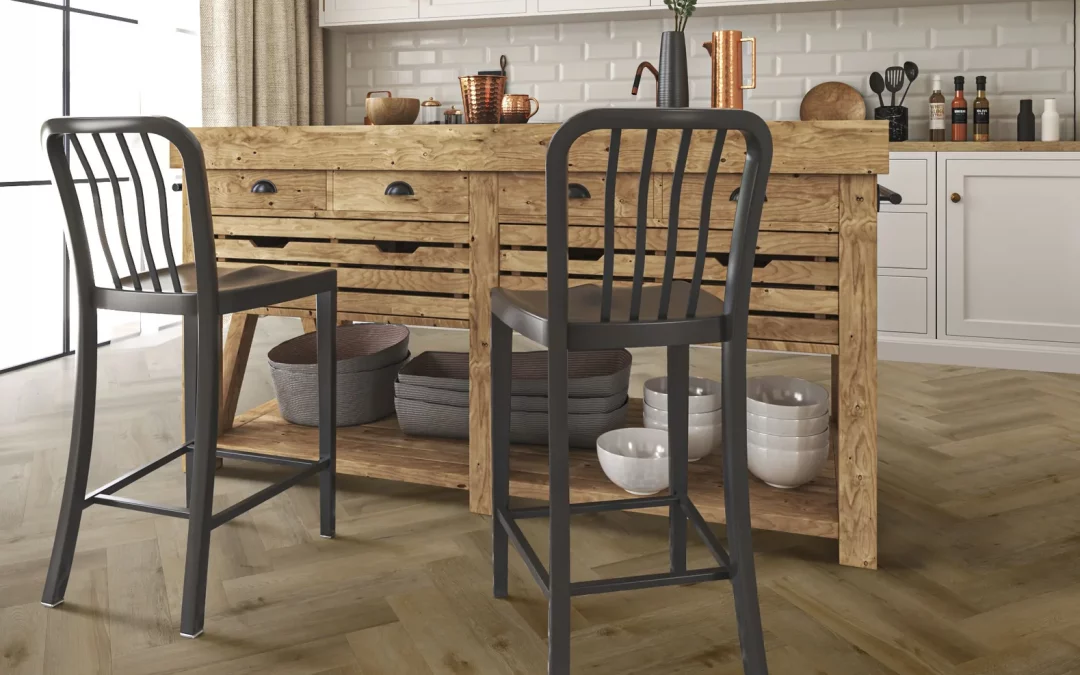
Wood flooring guide
Compare construction, site conditions, installation requirements, care, and project fit before choosing a wood floor for a mountain home.
Wood flooring can make a mountain home feel warmer, quieter, and more connected from one room to the next. Yet choosing “wood” is only the beginning. Homeowners still need to compare solid hardwood with engineered wood, evaluate the rooms involved, and understand how the selected product is meant to be installed.
There is no universal winner between solid and engineered wood. Each category contains many products, constructions, finishes, dimensions, and installation requirements. A floor that fits one Eagle County home may not be the sensible choice for another. Subfloor type, heating system, existing elevations, seasonal conditions, room use, maintenance expectations, and the desired appearance all influence the decision.
Eagle County Flooring helps homeowners move beyond a small sample and consider the complete project. The goal is not merely to choose an attractive color. It is to find a wood floor whose construction and installation plan make sense for the home.
What is solid hardwood flooring?
Solid hardwood flooring is milled from a single piece of wood. Depending on the product, it may be supplied unfinished for finishing after installation or prefinished at the factory. Species, grade, plank dimensions, edge treatment, texture, stain, sheen, and installation method can vary considerably.
Many homeowners value solid hardwood because it is a traditional material with natural variation and a substantial feel. Some solid floors may also be candidates for future sanding and refinishing. That possibility, however, should not be assumed from the category name alone. The product's thickness, profile, condition, prior refinishing history, installation, and remaining usable material all matter.
Solid hardwood can be an appropriate choice when the product, subfloor, room conditions, and installation method are compatible. It should be evaluated as a specific system rather than treated as the default merely because it is “real wood.” Engineered wood also has a genuine wood surface.
What is engineered wood flooring?
Engineered wood flooring combines a real-wood surface layer with a layered core. The composition and thickness of those layers differ by manufacturer and product line. This construction is intended to provide a wood surface while changing how the plank responds as a whole.
Engineered flooring is often considered for mountain homes because its layered construction may offer greater dimensional stability than some solid products. That does not make every engineered floor suitable for every location. Wear-layer thickness, core construction, plank width, finish, joint profile, installation method, and manufacturer requirements still deserve careful comparison.
The term “engineered” describes a broad category, not a single level of quality. Two products that look similar on a display board may differ substantially beneath the surface. Reviewing construction is therefore as important as comparing color or price.
Why mountain-home conditions affect the decision
Wood is a natural material that responds to its environment. Mountain properties can present a combination of seasonal weather, interior heating, dry periods, entryway moisture, tracked-in grit, changing occupancy, and rooms with different exposures. Those conditions do not automatically rule out either solid or engineered wood. They do make site evaluation and product instructions important.
Several project questions should be answered before a final selection:
- Where will the floor be installed? A central living space, upper-level bedroom, kitchen, entry-adjacent room, and lower level may present different conditions.
- What lies beneath it? The subfloor material, flatness, condition, existing layers, and transitions can affect the available installation methods.
- Is a radiant or other heating system involved? Compatibility must be confirmed for the particular flooring product and assembly.
- How is the property used? A primary residence, second home, rental property, and remodel under active construction may have different traffic and scheduling considerations.
- What does the manufacturer require? Site conditions, moisture evaluation, storage, acclimation, adhesives, fasteners, underlayments, and installation methods are product-specific.
These questions help prevent a design preference from being separated from the practical conditions that will shape the finished floor.
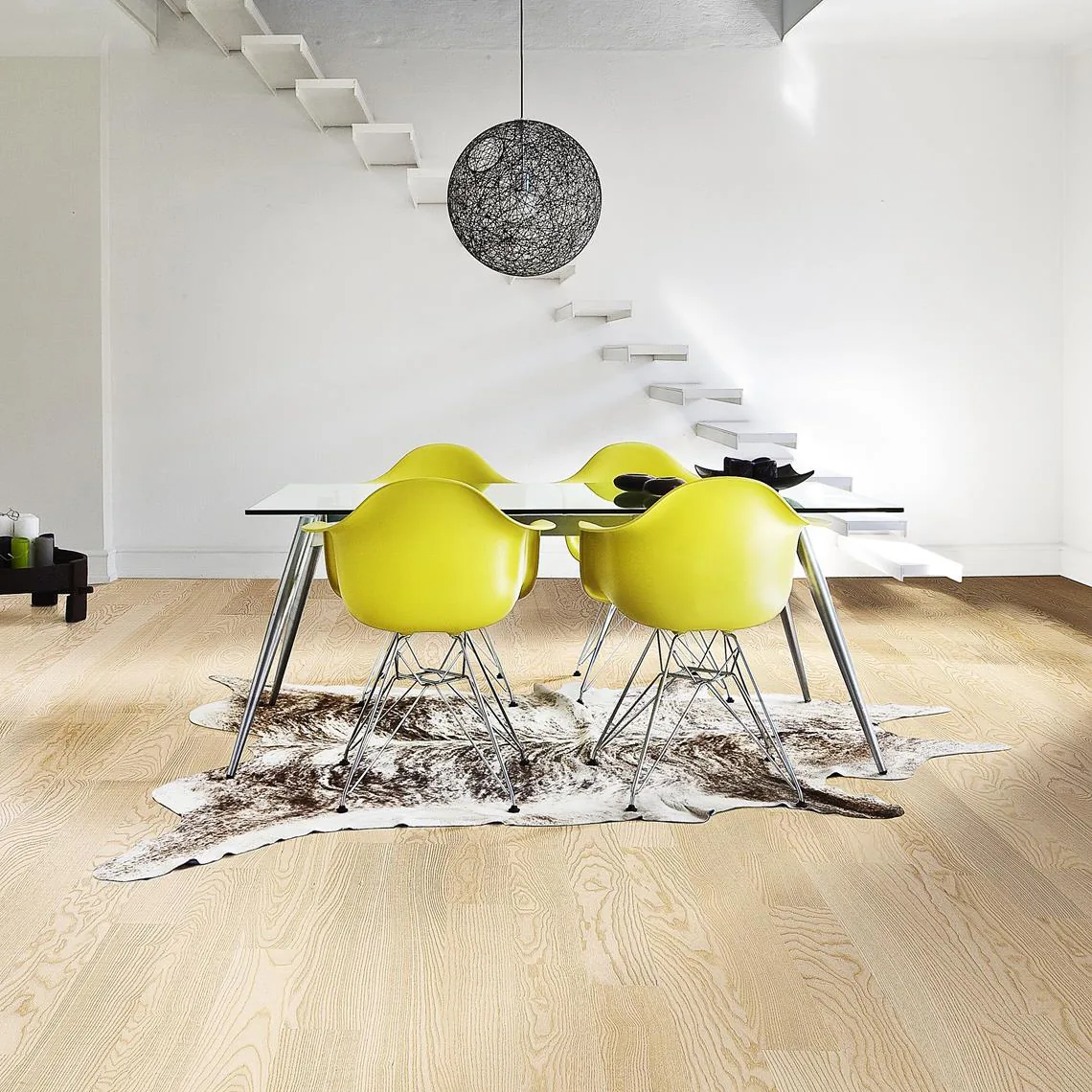
Solid hardwood and engineered wood compared
| Consideration | Solid hardwood | Engineered wood |
|---|---|---|
| Construction | One piece of wood | Real-wood surface over a layered core |
| Appearance | Natural variation; available in many species, grades, textures, and finishes | Also provides a real-wood appearance, with many species, grades, textures, and finishes |
| Stability | Performance depends on the product, dimensions, environment, and installation | Layered construction may provide greater dimensional stability in some applications |
| Installation | Common methods depend on the product and approved substrate | Depending on the product, options may include approved nail, staple, glue, or floating methods |
| Refinishing potential | May allow future refinishing when product thickness and condition permit | Varies with the thickness and construction of the real-wood surface layer |
| Product variation | Considerable | Considerable; core and surface construction should be compared closely |
The table is a starting point, not a substitute for product review. A well-matched solid floor can be preferable to a poorly matched engineered product, and the reverse is equally possible.
When engineered wood may be the stronger direction
Engineered wood may deserve early consideration when dimensional stability, installation flexibility, plank width, or compatibility with a particular assembly is important. It can be useful for connected living spaces where homeowners want the warmth of wood but need to work within specific site and product constraints.
It may also offer a practical route to wide-plank or prefinished appearances. Still, those visual benefits should be considered alongside the core, surface layer, approved installation method, warranty requirements, and expected use.
An engineered product should not be chosen solely because the category sounds more technically advanced. The quality and suitability of the particular floor remain decisive.
When solid hardwood may be the stronger direction
Solid hardwood may appeal to homeowners who prefer traditional construction, a particular species or grade, or the potential for future refinishing. It may fit projects where the subfloor, room conditions, floor elevation, and installation approach support the chosen material.
The possibility of refinishing can be valuable, although it should be assessed realistically. Not every older floor is a straightforward refinishing candidate, and not every new solid product permits unlimited future sanding. Floor condition, remaining material, prior work, desired result, and project schedule should be reviewed before refinishing is treated as the long-term plan.
Prefinished floors versus site-finished floors
The comparison between solid and engineered wood is separate from the choice between factory-finished and site-finished flooring. Both solid and engineered products may be available with factory-applied finishes, while some solid floors and certain engineered products may be finished after installation.
Prefinished flooring offers a defined manufacturer finish and can simplify portions of the installation sequence. Site-finished flooring permits finish decisions to be made as part of the installed floor, but it introduces sanding, finishing, cure-time, and occupancy considerations. Neither route is automatically better. The preferred approach depends on the desired appearance, construction schedule, household needs, and available products.
Appearance still matters, but it should come later in the process
Once suitable constructions have been identified, the design conversation can become more focused. Species, grade, color, grain, texture, plank width, finish, and natural variation all influence how the floor relates to cabinetry, trim, walls, stone, tile, furniture, and light.
Mountain-home interiors do not require one prescribed wood look. Pale natural finishes can create a quieter background, while richer tones or more visible character may bring warmth and contrast. The useful question is not which style is universally current. It is which appearance supports the architecture and the materials already present in the home.
This is where an in-home flooring consultation can be especially helpful. Samples can be reviewed in the actual rooms, under their natural and artificial light, instead of being judged only in a showroom environment.
Installation planning protects the design decision
A carefully chosen wood floor can still disappoint if the project conditions are ignored. Before installation, the plan may need to address subfloor preparation, moisture evaluation, floor height, transitions, stairs, heating systems, storage, acclimation, layout, access, and the selected manufacturer's instructions.
These details are not merely technical formalities. They influence how the floor meets adjacent materials, how the rooms read as a whole, and whether the installation follows the requirements attached to the product.
Eagle County Flooring evaluates wood flooring as part of that complete system. Homeowners can compare wood flooring options and discuss how the material, home, and installation plan fit together before making a final commitment.
Questions to ask before choosing a wood floor
- Is the product solid hardwood or engineered wood, and how is it constructed?
- What is the real-wood surface or wear-layer thickness?
- Which installation methods are approved for this product and subfloor?
- Is the product approved for the room and any heating system involved?
- What site conditions and moisture evaluations are required?
- Does the manufacturer specify storage or acclimation procedures?
- How will the floor meet tile, carpet, stairs, exterior doors, and other transitions?
- What cleaning and maintenance does the finish require?
- Is future refinishing possible, and what limits apply?
- How much natural variation should be expected across the installed floor?
Clear answers make it easier to compare products on substance rather than relying on a sample's color alone.
The practical conclusion
Engineered wood is often a strong candidate for mountain homes, particularly when stability or installation flexibility matters. Solid hardwood remains a valuable option when the product and conditions align with its construction and the homeowner's long-term goals. Neither category should be selected in isolation from the home.
The better decision emerges from a sequence: evaluate the rooms, understand the subfloor and site conditions, narrow the product constructions, confirm installation requirements, and then compare the finishes that fit the design.
Eagle County Flooring provides in-home guidance for wood flooring projects in Eagle County and surrounding Vail Valley communities. To discuss the rooms, current surfaces, project timing, and materials under consideration, contact Eagle County Flooring or call (970) 445-0933.
Frequently Asked Questions
Is engineered wood better than solid hardwood for a mountain home?
Engineered wood is often considered because its layered construction may provide greater dimensional stability in some applications. Solid hardwood can also be appropriate. The better choice depends on the specific product, rooms, subfloor, heating system, site conditions, installation method, and long-term goals.
Is engineered wood real wood?
Yes. Engineered wood flooring has a real-wood surface over a layered core. Surface thickness, core construction, finish, and overall quality vary by product.
Can engineered wood flooring be refinished?
Some engineered floors may be refinished, but the answer depends on the thickness and construction of the real-wood surface, the floor's condition, and the manufacturer's guidance. It should be confirmed for the specific product.
Does hardwood flooring need to acclimate in a mountain home?
Many wood products include requirements for site conditions, storage, moisture evaluation, or acclimation. Those instructions differ by product, so the installation plan should follow the selected manufacturer's current requirements rather than a single universal timetable.
Can wood flooring be used with radiant heat?
Some wood flooring products and installation systems may be approved for radiant heat, while others are not. Compatibility should be confirmed for the flooring, heating assembly, subfloor, installation method, and operating conditions.
Can samples be reviewed inside the home?
Yes. Eagle County Flooring offers in-home consultations so suitable samples can be compared beside the home's cabinetry, trim, walls, furniture, stone, tile, and actual light.
Review samples in your home
Choose the floor around the property and the project
Compare suitable wood-flooring options beside the home’s finishes and actual light.
Recent Comments